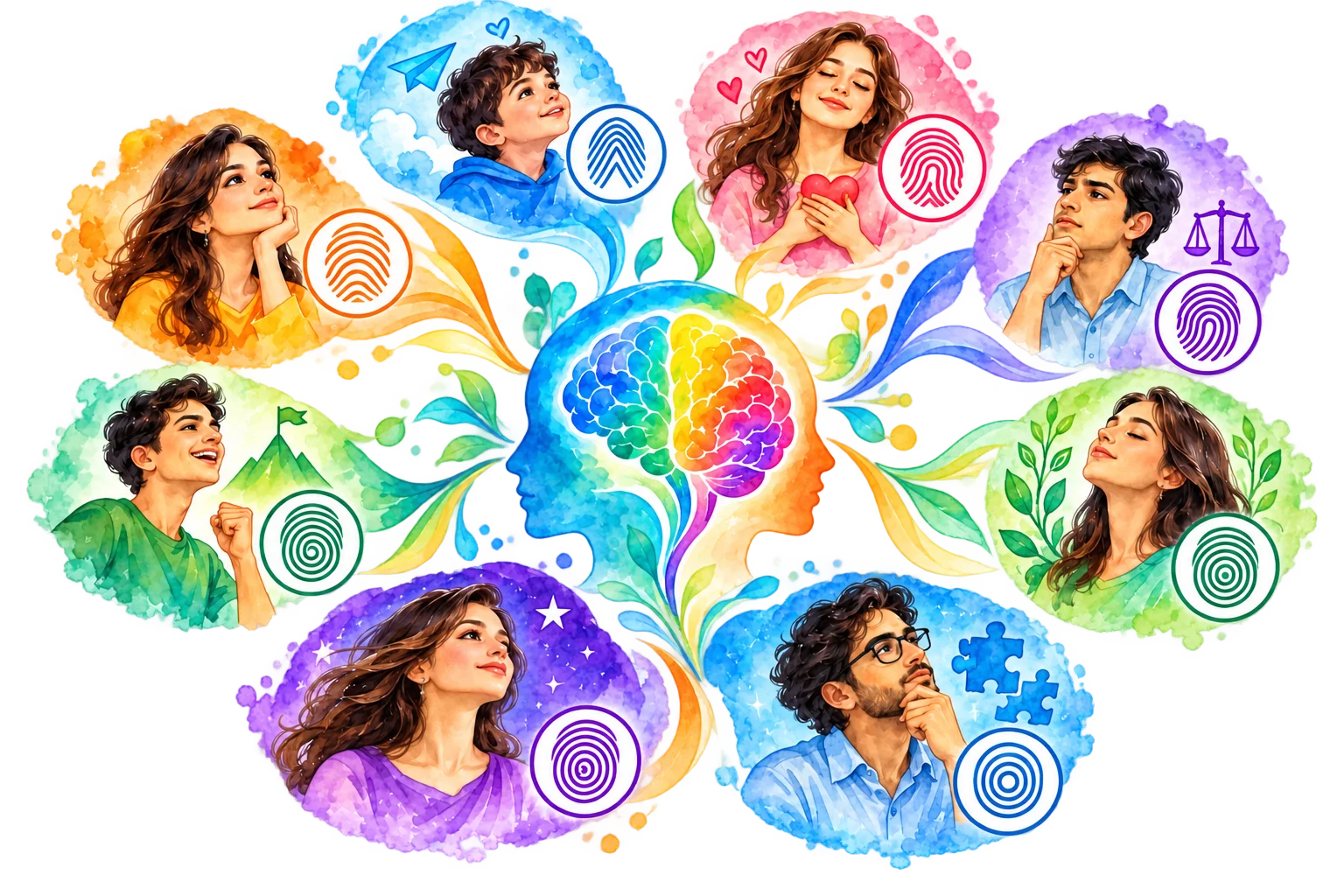
Understanding the Natural Cognitive Blueprint:

Every human being is unique—not only in appearance, but also in the way the mind naturally perceives, processes, and responds to the world.

Personality Design: The innate cognitive patterns that influence how we think, feel, interpret experiences, communicate, learn, make decisions, and respond to life. It is not a measure of intelligence, ability, success, or personal worth, nor does it determine our potential; rather, it represents the mind’s natural tendencies—the starting point from which every individual learns, grows, and develops throughout life. Every design possesses unique strengths, natural challenges, and distinctive ways of interacting with the world. Understanding these tendencies helps explain why people often think differently, communicate differently, and respond differently to the very same experiences. At Tattva, Personality Design is viewed as the foundation for understanding human individuality. It provides insight into how the mind naturally operates before life experiences, education, culture, and personal choices further shape behaviour.

What makes Tattva different? Tattva attempts to look beyond behaviour to understand the natural cognitive design from which behaviour emerges, exploring personality alongside neural processing, information processing, thinking orientation, and innate cognitive strengths. The purpose is not to put people into fixed categories or predict their future, but to foster self-awareness, empathy, personalised growth, and more meaningful relationships—because every human being deserves to be understood before they are judged.

1. The Eight Personality Designs:

Understanding the Natural Design of the Human Mind

Every human being is unique. Not because one person is better than another, but because every mind is naturally designed to perceive, process, and respond to life in its own distinctive way.

Tattva identifies Eight Personality Designs, each representing a unique pattern of cognitive and psychological functioning. These designs are not labels or categories that define a person’s worth. Instead, they provide a framework for understanding the natural tendencies through which individuals think, feel, communicate, learn, make decisions, and interact with the world.

Every Personality Design possesses its own strengths, challenges, motivations, and developmental opportunities. None is superior or inferior. Each represents a different expression of human potential.

Understanding these natural designs helps us appreciate why people respond differently to similar situations. It shifts our perspective from judging behaviour to understanding the underlying patterns that shape it.

ARCH

The Quiet Inner World

TENTED ARCH

The Passionate–Imaginative Mind

ULNAR LOOP

The Empathetic–Holistic Mind

RADIAL LOOP

The Critical–Judgemental Mind

WHORL PEACOCK

The Instinctive–Intuitive Mind

DOUBLE WHORL

The Comprehensive–Analytical Mind

WHORL SPIRAL

The Perfectionistic–Connecting Mind

WHORL TARGET

The Achievement–Focused Mind

2. NATURAL RHYTHM OF LEARNING

Every Mind Thinks at Its Own Speed

“The speed of thinking is not a measure of intelligence. It is a characteristic of how the brain naturally processes information.”

People often assume that someone who answers quickly is more intelligent, or that someone who takes longer to respond lacks ability. Tattva challenges this assumption.

According to the Tattva framework, every individual has a natural Neural Processing Speed—the pace at which the brain receives information, interprets it, connects it with existing knowledge, and generates a response. This processing speed influences learning, communication, decision-making, emotional reactions, and everyday interactions.

Understanding this natural variation helps us replace unrealistic expectations with greater patience and appreciation for individual differences.

What is Neural Processing Speed?

Neural Processing Speed refers to the natural rate at which the brain:

It is an aspect of how the brain functions, rather than how much a person knows.

Two people may possess the same level of knowledge or intelligence, yet differ significantly in the speed at which they process information.

Every mind has its own Natural Learning Rhythm.

Tattva identifies five distinct Learning Rhythms, each representing a different way in which the brain naturally acquires, processes, and applies knowledge.

1. FOUNDATION RHYTHM OF LEARNING

Learning Through Practice

2. PROGRESSIVE RHYTHM OF LEARNING

Learning Through Structure

3. GUIDED RHYTHM OF LEARNING

Learning Through Direction

4. DYNAMIC RHYTHM OF LEARNING

Learning Through Challenge

5. ACCELERATED RHYTHM OF LEARNING

Learning at Lightning Speed

3. BRAIN DOMINANCE

Every Mind Has a Natural Way of Thinking

“Some minds seek answers. Others create possibilities. Both are essential.”

Brain Dominance describes the natural way a person approaches information, decisions, and problem-solving. While every individual uses both sides of the brain, most people naturally lean towards one style of thinking more than the other.

In Tattva, Brain Dominance is not about intelligence. It reflects whether your mind naturally prefers convergent thinking—analysing information to arrive at the best answer—or divergent thinking—exploring possibilities to generate new ideas.

Understanding your Brain Dominance helps explain why people solve the same problem in very different ways.

The Two Brain Dominance Styles
🧠 Logical Brain

Prefers analysis, structure, reasoning, and clarity before taking action.

🎨 Creative Brain

Prefers imagination, possibilities, intuition, and action through exploration.

4. ACTION ORIENTATION

How Does Your Mind Respond?

“Some minds move into action. Others move into analysis.”

Every person receives information, but not everyone responds in the same way.

Some people naturally act first and refine as they go. Others naturally analyse first and act only after they are confident in their decision.

Tattva calls this Action Orientation—the brain’s natural tendency to approach decisions through execution or analysis. Neither style is better. Each contributes unique strengths when understood and balanced.

The Two Action Styles
🚀 Proactive Executor

Acts quickly. Learns through experience. Comfortable making decisions.

🔍 Retroactive Analyser

Thinks deeply. Plans carefully. Prefers certainty before action.

5. INFORMATION PROCESSING ARCHITECTURE

How Your Mind Receives, Processes, and Responds

“Every thought begins with information. Every decision begins with the way the brain processes that information.”

Every experience starts with an input. We see something, hear something, or experience something through action. The brain receives these inputs, interprets them, gives them meaning, and finally produces a response.

Tattva explains that although people may behave similarly on the outside, the way they receive, process, and respond to information is unique to each individual. Understanding this internal architecture helps explain differences in learning, communication, decision-making, and behaviour.

The Three Stages of Processing
1. Sensory Input

How information enters the mind.

2. Cognitive Processing

How the brain interprets information.

3. Executive Response

How thoughts become action.

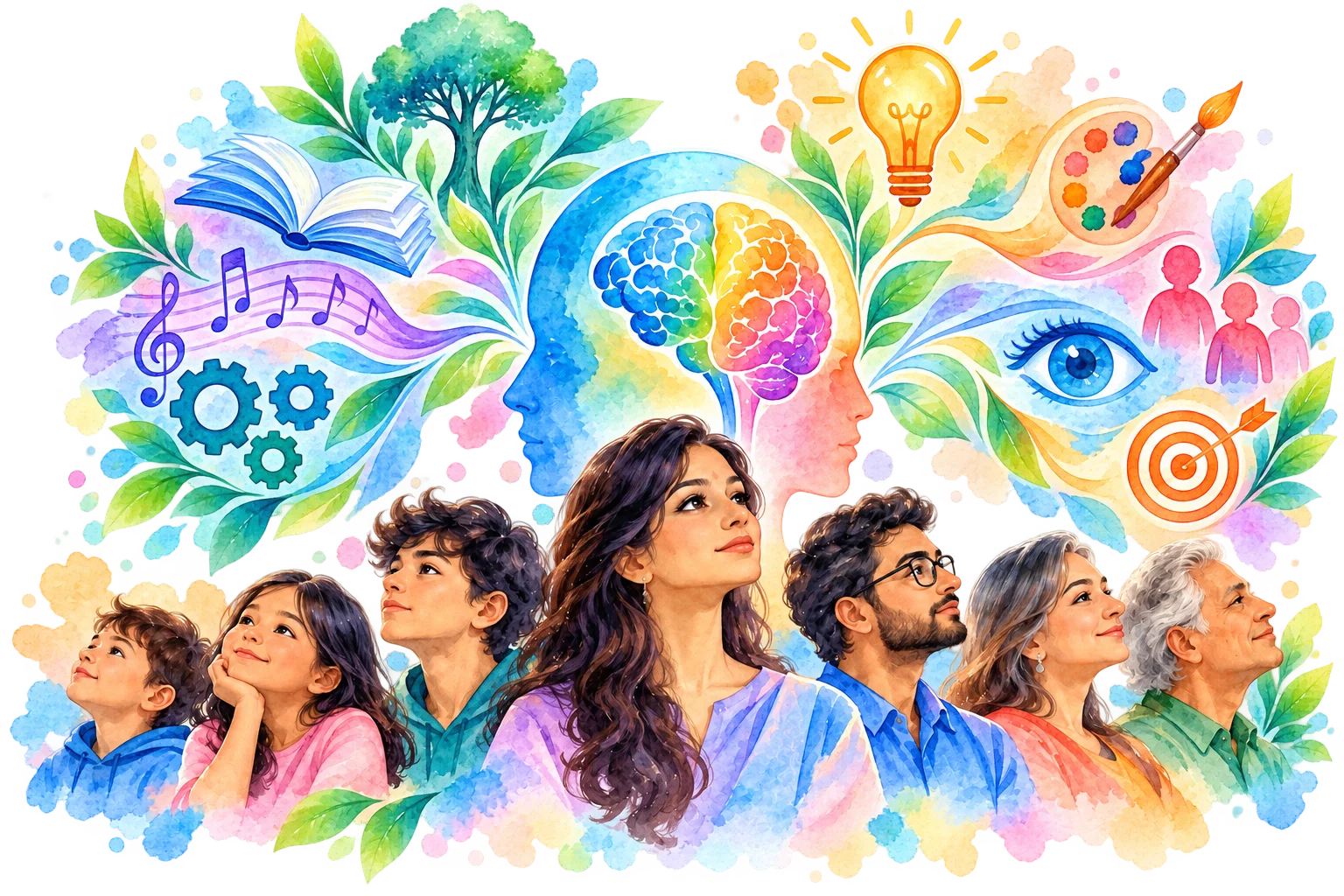
6. THE TEN CORE HUMAN CAPACITIES

Every Mind Has Unique Strengths

“Understanding your strengths is the first step toward developing your full potential.”

Every individual possesses a unique combination of natural abilities. Some people naturally connect with others, some excel at reasoning, some are driven by imagination, while others possess exceptional memory or planning abilities.

Tattva identifies Ten Core Human Capacities that influence how we think, communicate, learn, remember, plan, and interact with the world. These capacities are not fixed limits—they represent natural tendencies that can be developed with awareness and practice.

The Ten Core Human Capacities

LEFT HEMISPHERE (Human Connection)

🤝 People Skills

Connecting with and understanding people.

💡 Imagination

Creating ideas, possibilities, and vision.

🏃 Action Orientation

Physical expression and learning through action.

🎵 Auditory Sensitivity

Understanding emotion through tone and sound.

👁 Visual Sensitivity

Seeing possibilities, patterns, and future vision.

RIGHT HEMISPHERE (Execution & Thinking)
📋 Planning & Management

Organising people, tasks, and decisions.

🧩 Analytical Reasoning

Logic, communication, and problem-solving.

🪜 Action Sequencing

Breaking complex tasks into achievable steps.

🗣 Auditory Memory

Remembering conversations, language, and verbal information.

📸 Visual Memory

Remembering images, details, and visual experiences.